
UNDERSTANDING SURVIVAL MECHANISM
Your Survival Mechanism ≠ Your Whole Self
One outcome: SURVIVAL. Three different ways of responding.
Survival Mechanism is Lawrence Fernandes’s conceptual framework for understanding your core birth operating system—the underlying survival patterns that influence how you think, feel, relate, and respond.

What Is a Survival Mechanism?
In Lawrence’s framework, a Survival Mechanism describes an underlying way of responding to life. It influences what a person seeks, what they experience as threatening, and how they respond to expectations, uncertainty, relationships, and change.
These patterns may become so familiar that we identify them as our personality. Exploring them invites a deeper question: what is operating beneath the response we see?
One Outcome—SURVIVAL. Three Different Ways.
Lawrence describes three Survival Mechanisms through the child’s unconscious experience of being wanted, partly wanted, or unwanted. These terms refer to the message experienced by the child, not the child’s worth.

Wanted Child
Explore the mechanism associated with an unconscious experience of being wanted by both parents.

Partly Wanted Child
Explore the mechanism underlying an unconscious experience of being wanted by one parent while receiving a different message from the other.

Unwanted Child
Explore the mechanism associated with an unconscious experience of not being wanted by either parent.
Different Patterns. Different Responses.
Thinking
How we interpret situations and imagine possible outcomes.
Emotions
What evokes reassurance, anger, fear, disappointment, or uncertainty?
Communication
How we express needs, respond to others, and handle disagreement.
Relationships
How we experience closeness, expectations, belonging, and conflict.
Decisions
What we pursue, avoid, postpone, or repeatedly choose.
Behavior
The familiar actions and reactions that become visible to others.
The Same Mechanism ≠ The Same Outcome

A Survival Mechanism does not operate in isolation. The environment can support a familiar response—or make that response difficult to sustain.
Consider animals adapted to daylight and those adapted to darkness. Their abilities have different advantages depending on the conditions. Lawrence uses this analogy to explore how changing circumstances may affect human survival patterns.
What works in one environment may become a trap in another.
What Keeps Repeating in Your Life?
1.
What situations repeatedly trigger a familiar reaction?
2.
What do you expect from others—and what happens when they respond differently?
3.
What feels necessary for your sense of safety or belonging?
4.
When circumstances change, do your responses change with them?

Politics & Survival
Power, Identity, and Survival Mechanisms shaping the public life

Media & Communication
Narrative, Influence, and Survival Mechanisms behind what we see and hear,

Justice & Society
Law, Fairness, and Survival Mechanisms within the Society

Everyday Survival
Decisions, Relationships, and Survival Mechanisms in Daily Life
Explore the Ideas Behind Saikolawji
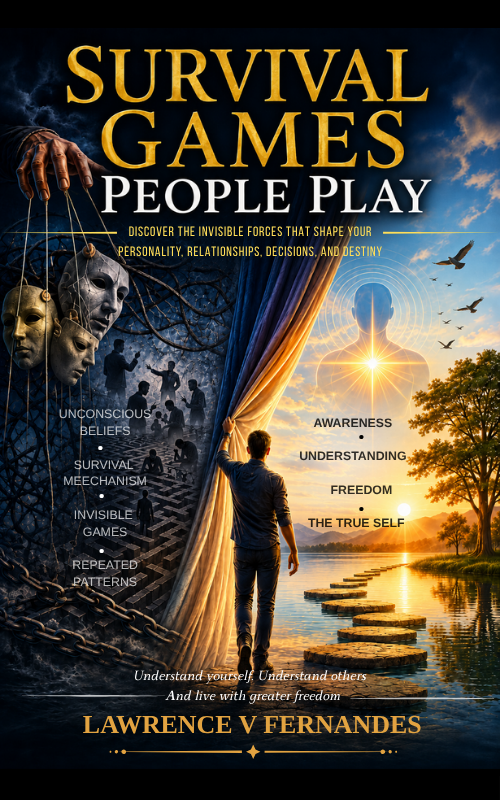
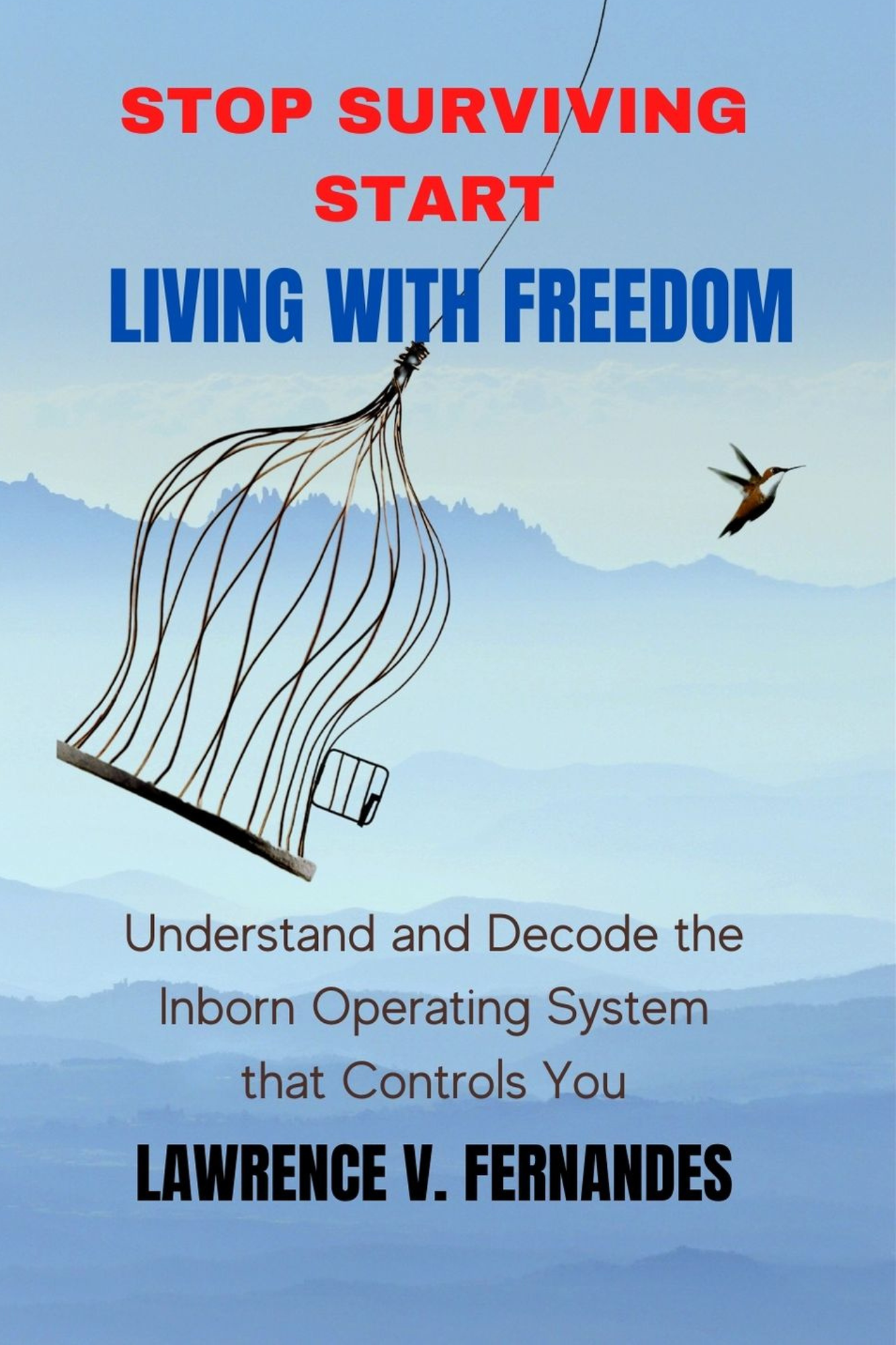
Lawrence V. Fernandes explores Survival Mechanism, identity, and recurring human patterns across three books. Discover the ideas that inform the videos and articles on Saikolawji.
Books

Podcast


Understanding Core Patterns
Understanding the Survival Mechanism
A lens for exploring recurring patterns in behaviors, emotions, communication, and decision-making.
One outcome: SURVIVAL. Three different ways of responding.
Survival Mechanism is Lawrence Fernandes's conceptual framework for understanding and reflection. Interpretations of public behaviors are illustrative, not personal diagnoses.